Lamp color temperature, room by room
Color temperature confuses plenty of customers and changes how a room feels. This guide explains it in plain terms you can use on the sales floor.
Updated:
In short
Lamp color temperature describes whether a bulb's light looks warm, neutral or cool, and it is measured in kelvin (K). The lower the number, the warmer and more golden the light. 2700 K is the warm light of living rooms and bedrooms, 3000 K a crisper warm, 4000 K neutral for kitchens and work, and 6500 K cool daylight.
Which color temperature suits each room
2700 K, warm
The tone of classic incandescent bulbs. Cozy and relaxed, right for living rooms, bedrooms, dining rooms and table lamps.
3000 K, crisp warm
Still warm but whiter, close to halogen. Works in dining rooms, hallways, bathrooms and kitchens that open onto the living room.
4000 K, neutral
Plain white, with no yellow or blue tint. Good for kitchens, laundry rooms, home offices and work areas where seeing clearly matters.
6500 K, daylight
Cool, with a bluish cast similar to natural light on an overcast day. Useful in workshops, garages and precision tasks. At home it often feels cold.
How to explain color temperature to a customer
- 1
Ask about the room and the task
Reading in bed and chopping vegetables need different light. The room and the activity settle the color temperature before personal taste does.
- 2
Translate the number into words
Warm, neutral or cool is easier to grasp than 2700 or 4000 K. Give them the number so they can find it on the box.
- 3
Show the difference
A display with three identical bulbs at different temperatures explains itself. Without one, show photos of the same lamp lit.
- 4
Read the rest of the box
Beyond kelvin, check lumens (how much light), CRI (how true colors look) and whether the bulb is dimmable.
What color temperature is and how it's measured
Color temperature describes the tone of white light, from a golden white to a bluish white. It is expressed in kelvin, a unit of temperature borrowed from physics. Low numbers mean warm light and high numbers mean cool light, the opposite of what many people expect.
On packaging it appears as a number followed by K. In the US, 2700 K bulbs are often labeled soft white and those between 5000 and 6500 K daylight. The label is a good place to start the conversation, but the number is more precise.
Lamp color temperature by room
For relaxing, eating and sleeping, warm light between 2700 and 3000 K is the usual choice. Kitchens, bathrooms and home offices benefit from more clarity, at 3000 or 4000 K depending on taste. Avoid mixing very different temperatures in one room, because walls and surfaces end up looking two colors.
Some LED bulbs get warmer as you dim them, the way incandescent bulbs did, and are often sold as dim-to-warm. Others let you pick between several temperatures with a switch. Both suit mixed-use spaces, such as a living room with a desk.
Kelvin, lumens and CRI measure different things
More kelvin doesn't mean more light. Brightness is measured in lumens, and a warm bulb can put out as much light as a cool one. CRI, the color rendering index, shows how faithfully colors look under that light. A CRI of 80 is fine for most of a home, while art, fabrics or makeup call for 90 or higher.
Why seeing a lamp lit matters
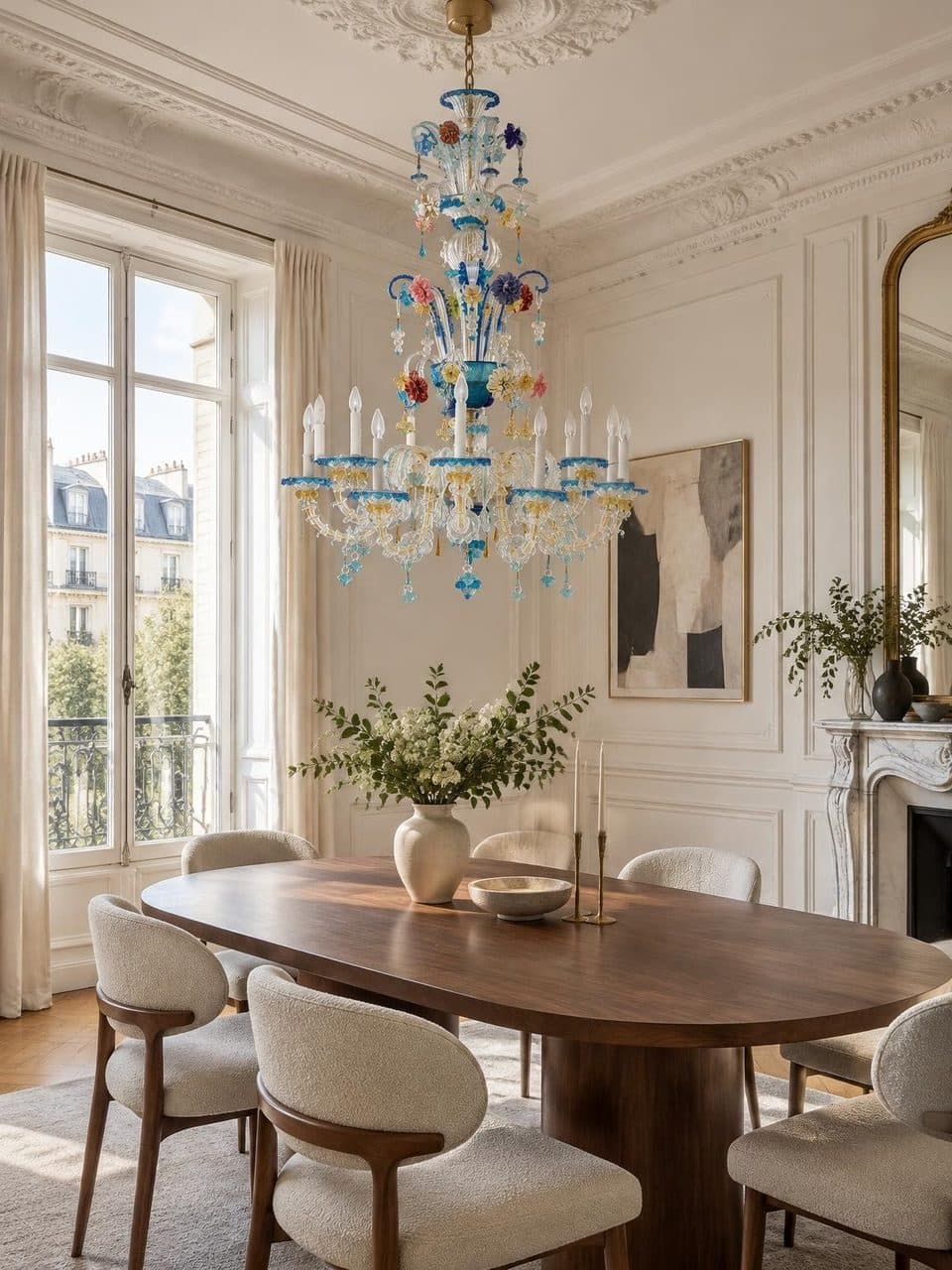
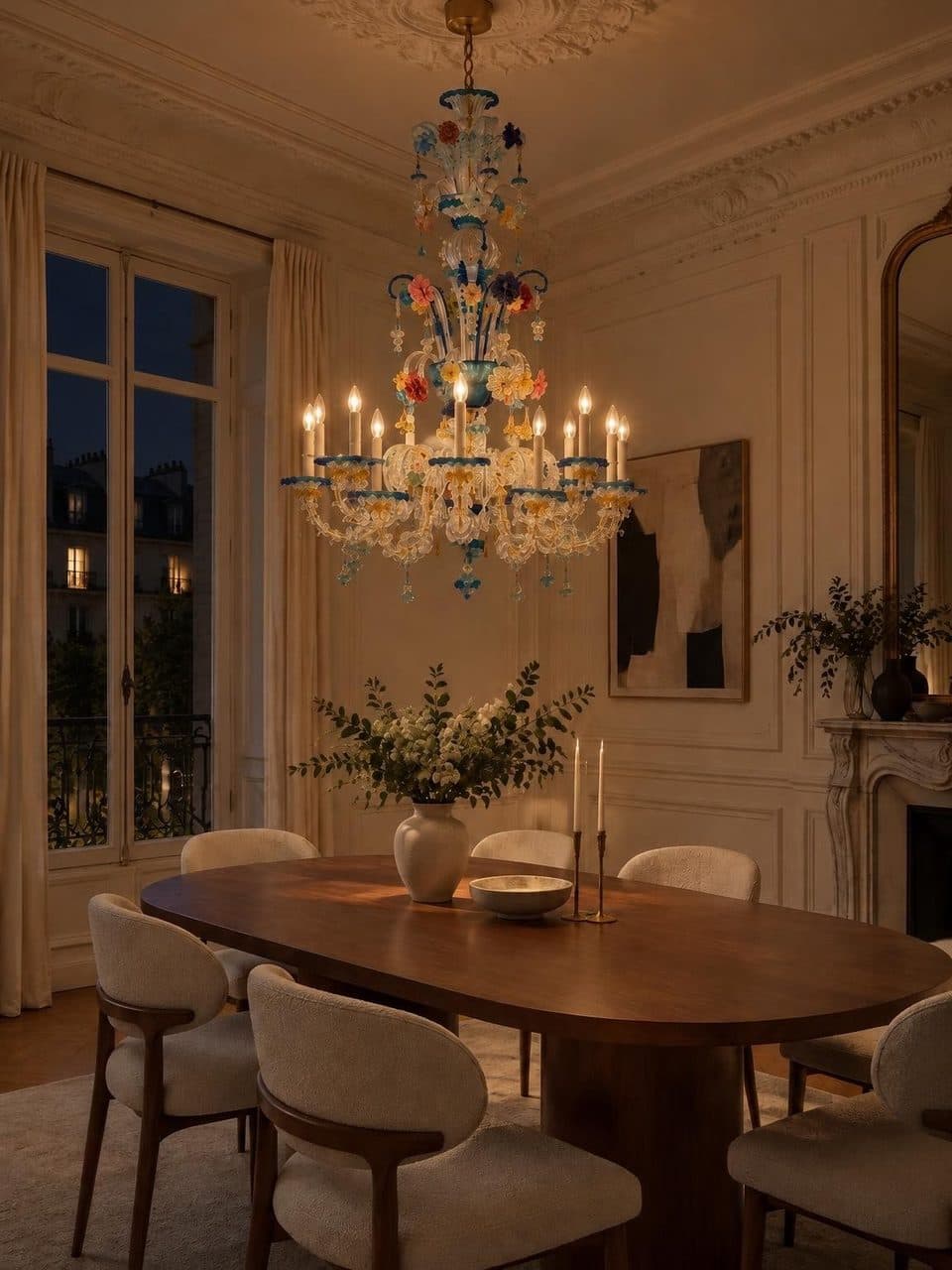
The shade, the diffuser and the materials change the light. A linen shade warms it, opal glass spreads it evenly and a perforated piece throws patterns on the wall. None of that shows in a photo of the lamp switched off.
That is why each lamp should be shown lit. Lucy presents every product in a store's catalog by day and by night with the light on, so the customer sees how the room changes. The final color temperature depends on the bulb they choose, so it's worth noting on the product page.
Frequently asked questions
What color temperature is best for a living room?
Warm light, between 2700 and 3000 K. It makes the room feel inviting and flatters skin and wood. If you also read or work there, add a floor or table lamp with more output rather than switching the whole room to cool light.
Does a higher kelvin mean more light?
No. Kelvin describes the tone of the light, warm or cool. The amount of light is measured in lumens. A 2700 K bulb and a 6500 K bulb can put out exactly the same amount of light and still look very different in the same room.
What is daylight color temperature?
Daylight bulbs sit between 5000 and 6500 K and have a bluish cast close to natural light on an overcast day. They suit workshops, garages and precision tasks. In bedrooms and living rooms they tend to feel cold and harsh at night.
Can I mix color temperatures in one home?
Yes, across different rooms it's fine. What to avoid is mixing very different temperatures within the same room, because walls and objects end up looking two colors. If you need task light in a living room, look for a crisp warm white.
Does the lampshade change the color of the light?
Yes. Fabric, paper and colored glass shades tint the light that passes through them. Natural linen warms it, while white opal glass leaves it nearly unchanged. That is why the same bulb can look different in two lamps.
Keep reading
- FeaturesDay and nightEvery lamp in a real room, switched off by day and lit at night, one tap apart.
- StylesScandinavian styleWhich lamps, materials and color temperature suit a Scandinavian room, by day and by night.
- GuidesWhat is a virtual showroomDefinition, types and which one suits a lighting store, from 360° tours to staged scenes.
Your catalog, by day and lit at night
We migrate your catalog, stage every lamp, and you edit prices whenever you want.