Japandi lighting, calm by day and warm at night
Japandi blends Japanese minimalism with Nordic warmth. Few pieces, natural materials and low, soft light that makes you want to stay.
In short
Japandi lighting uses a few lamps in natural materials, with warm light placed low in the room. Paper lanterns, opal glass shades, wood, bamboo and unglazed ceramics all fit. Choose 2700 K as the base, drop to 2200 K at night, and leave empty space around each lamp so it can stand out.
Lamps that suit Japandi style
Paper lantern
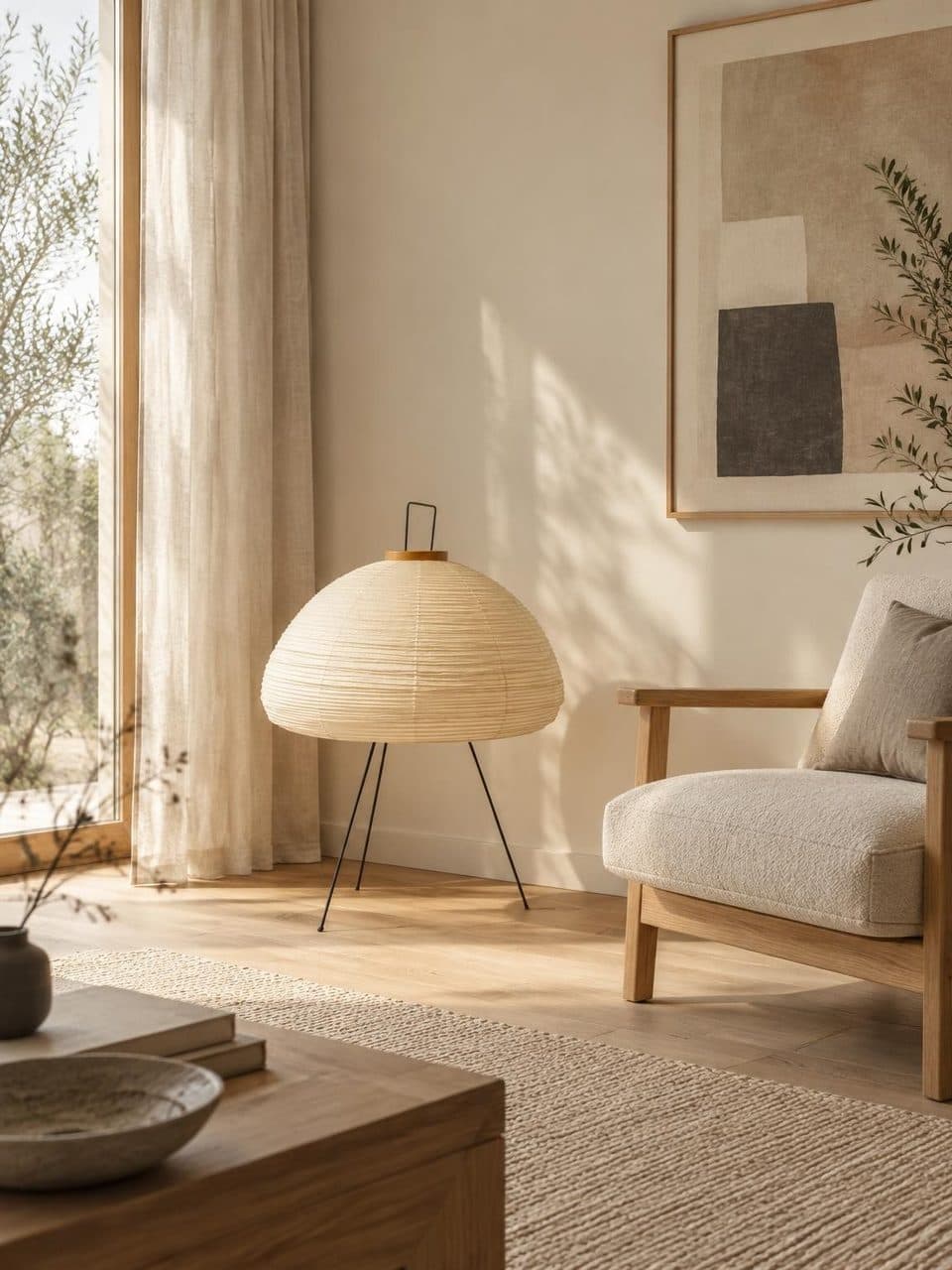
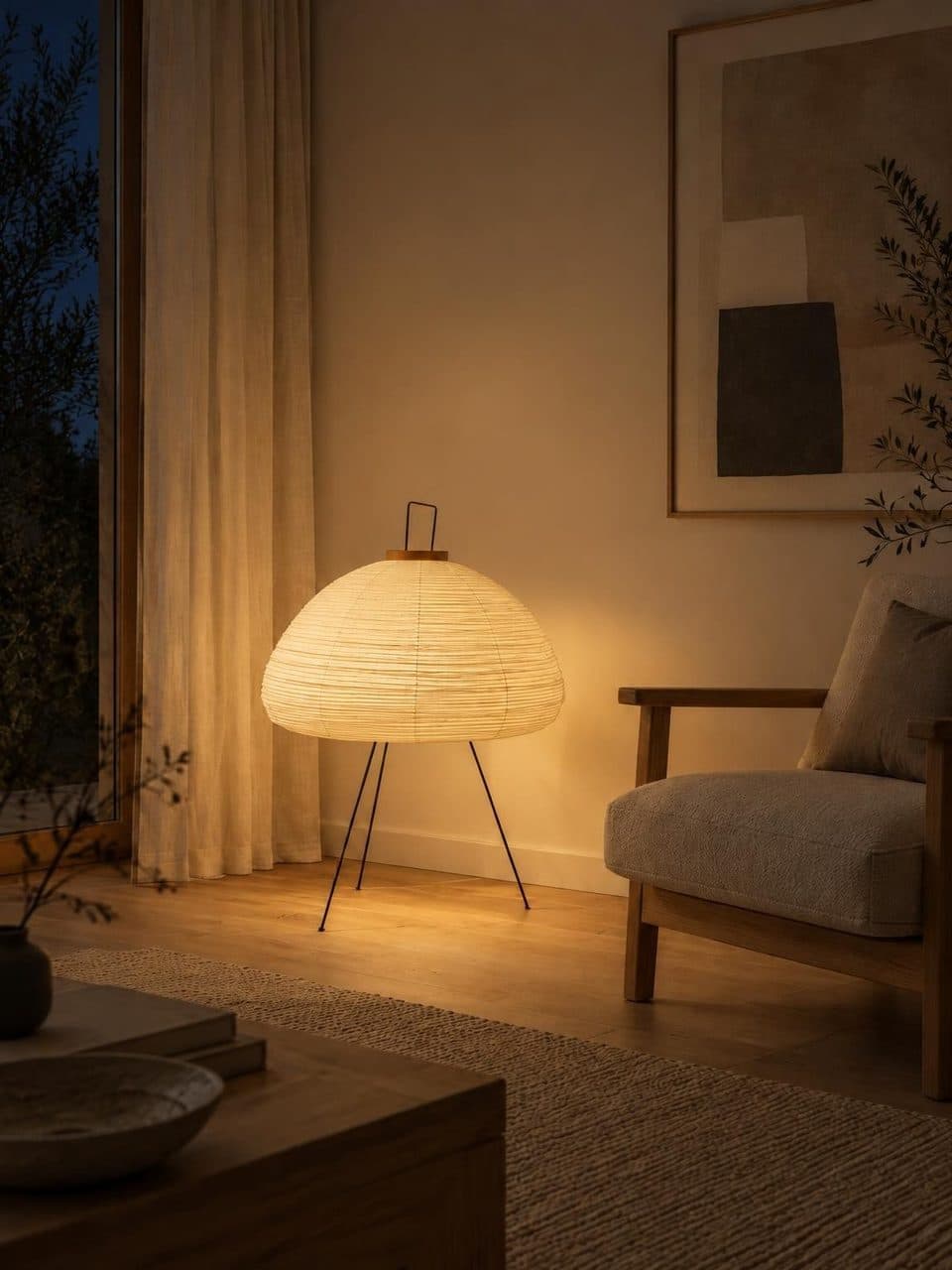
As a floor lamp or a pendant, the paper lantern is the most recognizable piece of the style. It spreads light in every direction and looks light and handmade by day.
Opal glass dome
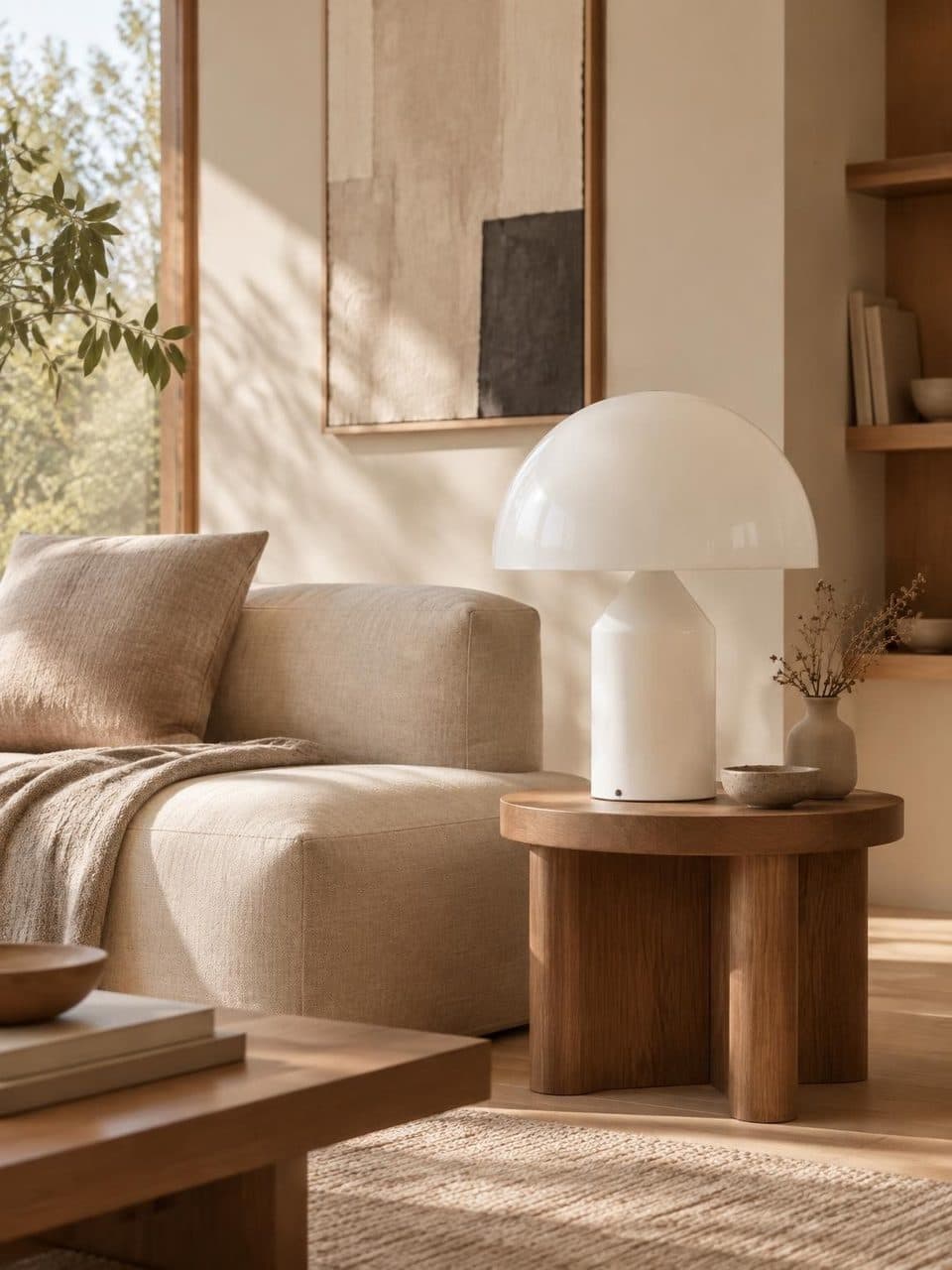
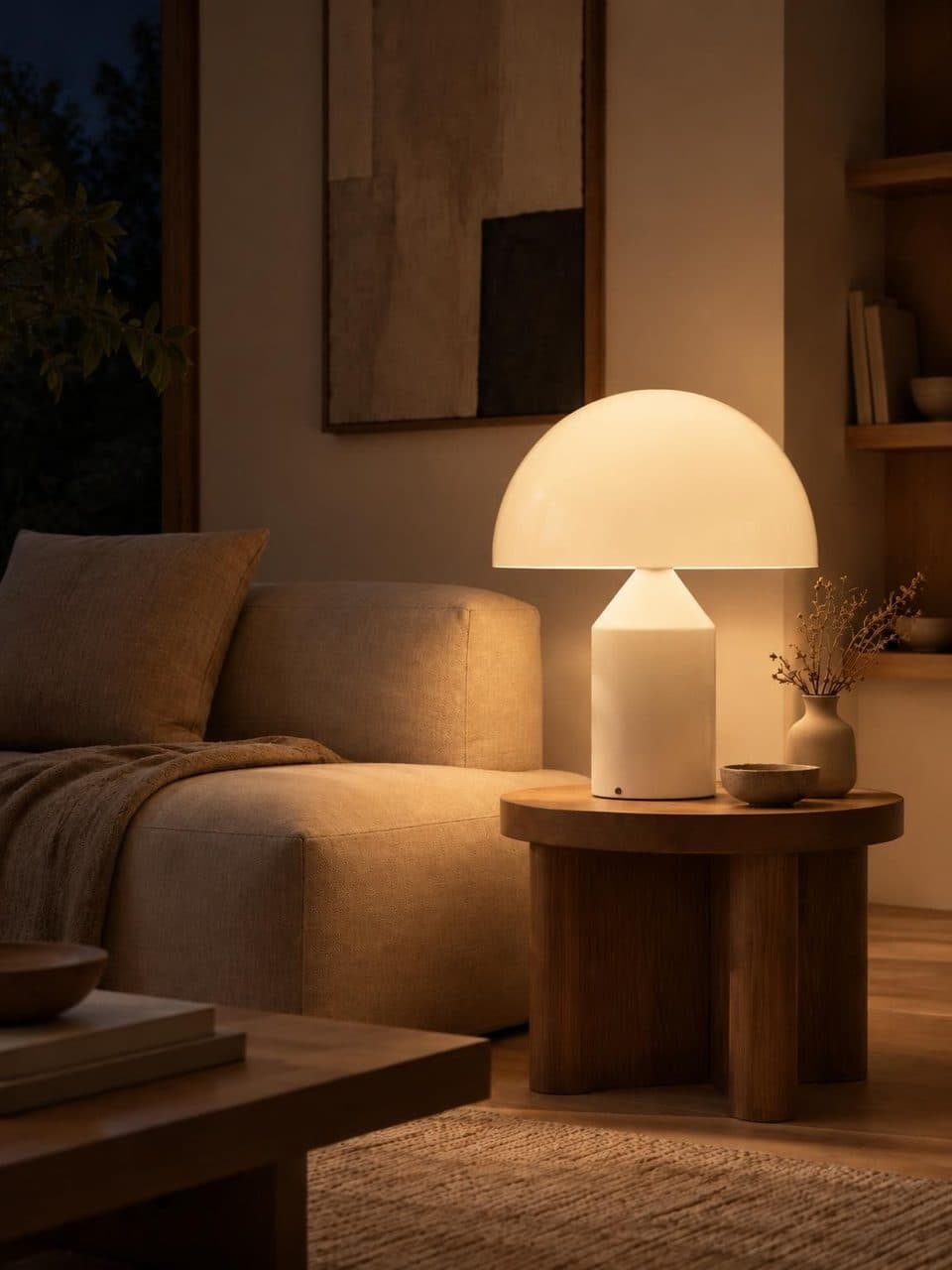
On a low wooden table, a lamp with a white glass dome gives an even, quiet light.
Wood or bamboo pendant
Wood slats or woven bamboo add texture and cast soft shadows on the ceiling. They work well over a dining table.
Ceramic or stone base
A table lamp with an unglazed ceramic or stone base and a linen shade ties in with the handmade objects in the room.
Low light near the floor
Lamps that sit on the floor or stand low match the low furniture. Next to an armchair or in an empty corner they set a calm mood.
How to light a Japandi room
- 1
Start by taking things away
Before you add lamps, remove objects. Japandi needs empty space so each piece, the lamp included, can be seen.
- 2
Pick one lead lamp
A paper lantern or a sculptural lamp in a clear corner defines the room. One per area is enough.
- 3
Keep the light low
Favor table and floor lamps over ceiling spots. Light at the height of low furniture feels more intimate.
- 4
Dim it at night
A dimmer or 2200 K bulbs give an amber tone, close to candlelight, that brings out wood and paper.
Materials and palette of Japandi
The palette runs from warm white and beige to light and dark wood used together, with touches of stone gray or charcoal. Materials have texture, like linen, paper, stone, unglazed ceramics and wood with visible grain.
Japandi lamps follow the same line. Paper, wood, bamboo, opal glass and matte black metal. Chrome and glossy finishes stay out because they compete with the calm of the room.
Color temperature for Japandi lighting
Use warm 2700 K light as the base. At night, in the living room or bedroom, a 2200 K bulb gives a more amber tone that brings out wood and paper.
Save neutral or cool light for the kitchen or a work area. Look for bulbs with good color rendering, CRI 90 or higher, so wood and textiles do not look gray.
A Japandi room by day and by night
By day, Japandi is daylight filtered through linen curtains and soft shadows on the walls. A lamp that is off works as one more object, through its shape and material.
At night, the room closes in around the light. A lit paper lantern becomes a warm, diffuse source and the rest of the space falls into shadow. That contrast between light and shade is part of the style.
Common mistakes in a Japandi room
They almost always come from adding too much.
- Filling the room with lamps and objects.
- One bright, cool ceiling light as the only source.
- Metallic shades that reflect light and cause glare.
Show your lamps in a Japandi room with Lucy
With Lucy, every lamp in your catalog is staged in a Japandi living room with low furniture, wood and linen, from the photo you already have. The scene keeps the lamp's shape, color and materials.
The scenes on this page show it with a paper lantern on a tripod next to a wooden armchair and an opal glass table lamp on a low table. Your customers see them by day with the light off and at night with it on, with one switch.
Our team migrates your catalog, and then you edit names, descriptions and prices yourself, for US$20 a month.
Frequently asked questions
What is Japandi style?
It blends Japanese minimalism with the warmth of Scandinavian design. You can spot it by its low furniture, light and dark wood used together, natural materials with texture and plenty of empty space. The light is warm, low and diffuse.
What lamps go with Japandi?
Lamps in paper, wood, bamboo, ceramic or opal glass, with simple shapes. The paper lantern is the best known, but table lamps with a stone base and a linen shade work too. What matters is keeping them few and giving each one room.
What color temperature should I use in a Japandi room?
Warm 2700 K light as the base and 2200 K for a more intimate mood at night. Neutral 4000 K light is better kept for work areas such as the kitchen, not the living room or bedroom.
Can I show lamps that are not Japandi in this setting?
Yes, as long as the lamp has simple lines. A plain table lamp or an opal glass pendant looks right in a Japandi room even if it was not designed for one. In Lucy you pick the setting for your catalog, and if none fits your brand you can ask us for your own.
Keep reading
- StylesScandinavian styleWhich lamps, materials and color temperature suit a Scandinavian room, by day and by night.
- GuidesLamp color temperatureWhat 2700 K, 3000 K, 4000 K and 6500 K mean, which suits each room and how to explain it.
- Who it’s forHome decor storesYour lamps in a room that matches your store, by day and lit at night.
Your catalog, by day and lit at night
We migrate your catalog, stage every lamp, and you edit prices whenever you want.