Scandinavian lighting, by day and by night
Scandinavian design grew up in countries with long winters and short days. That is why it cares as much about daylight as about warm, layered light after dark.
In short
Scandinavian lighting layers several sources of warm light instead of relying on one ceiling fixture. Pendants in paper, wood or opal glass, table and floor lamps with fabric shades, and simple wall lamps all fit. Use 2700 K bulbs and place the light at different heights so the room feels cozy at night.
Lamps that suit Scandinavian style
Paper or wood pendant
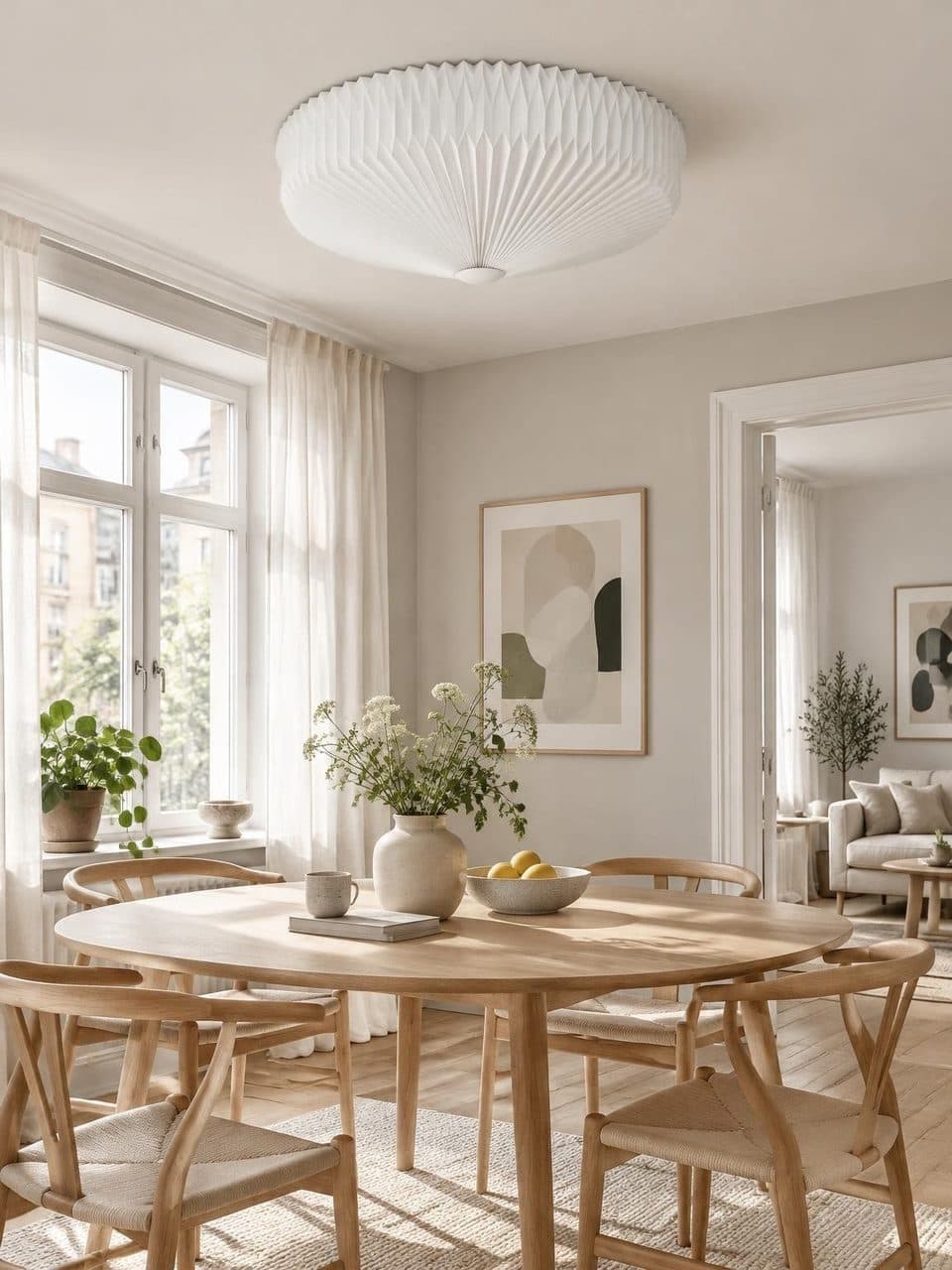
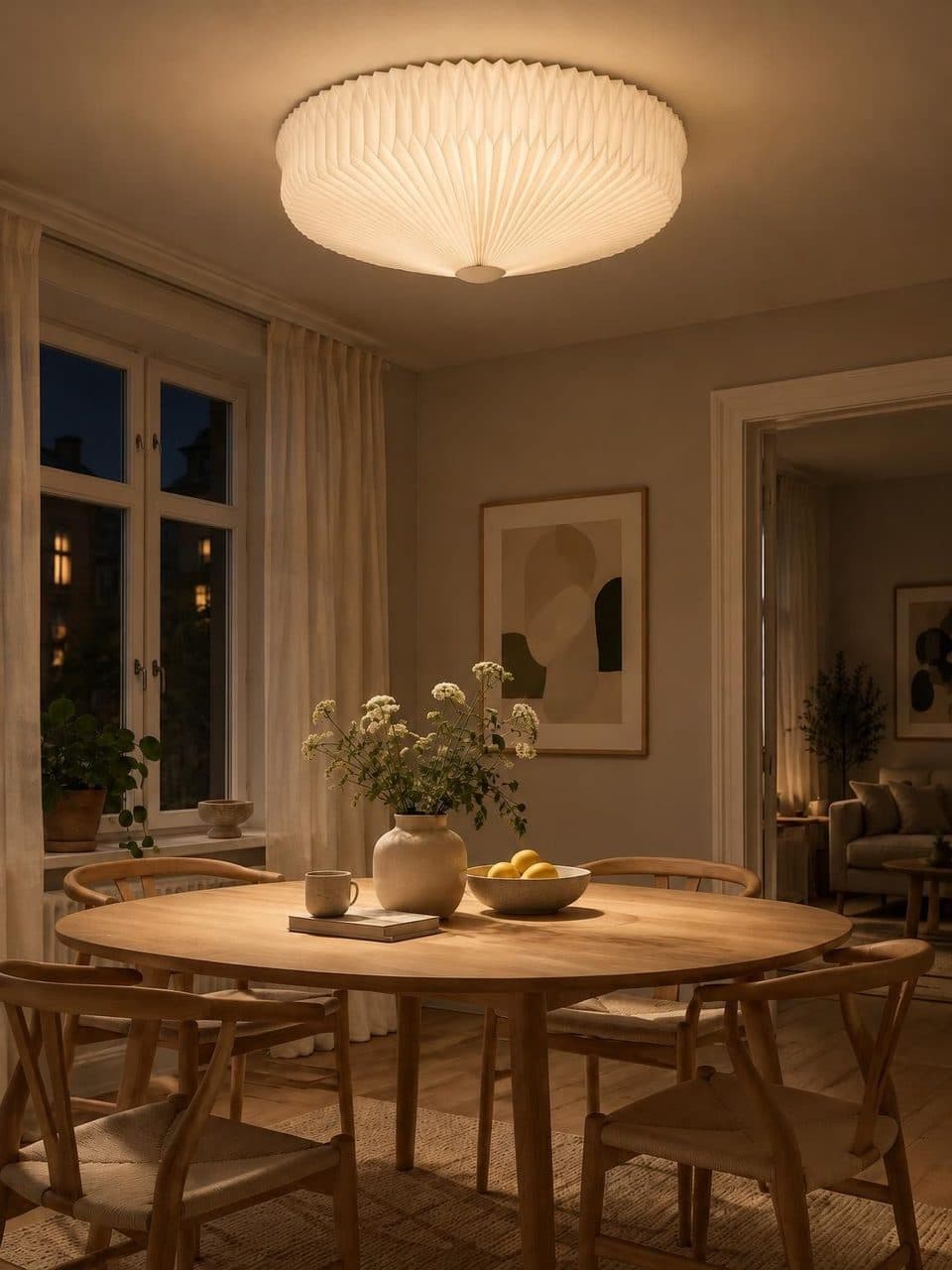
Over the dining table, a pleated paper or wood veneer pendant diffuses the light without glare. By day it adds texture, and at night it becomes the warm center of the room.
Opal glass
White opal glass spreads an even, soft light. Its simple shapes match furniture with clean lines.
Floor lamp with a fabric shade
Next to a reading chair it gives mid-height light, the kind you use most in the evening. Look for a linen or light cotton shade on a wood or slim metal base.
Enameled metal table lamp
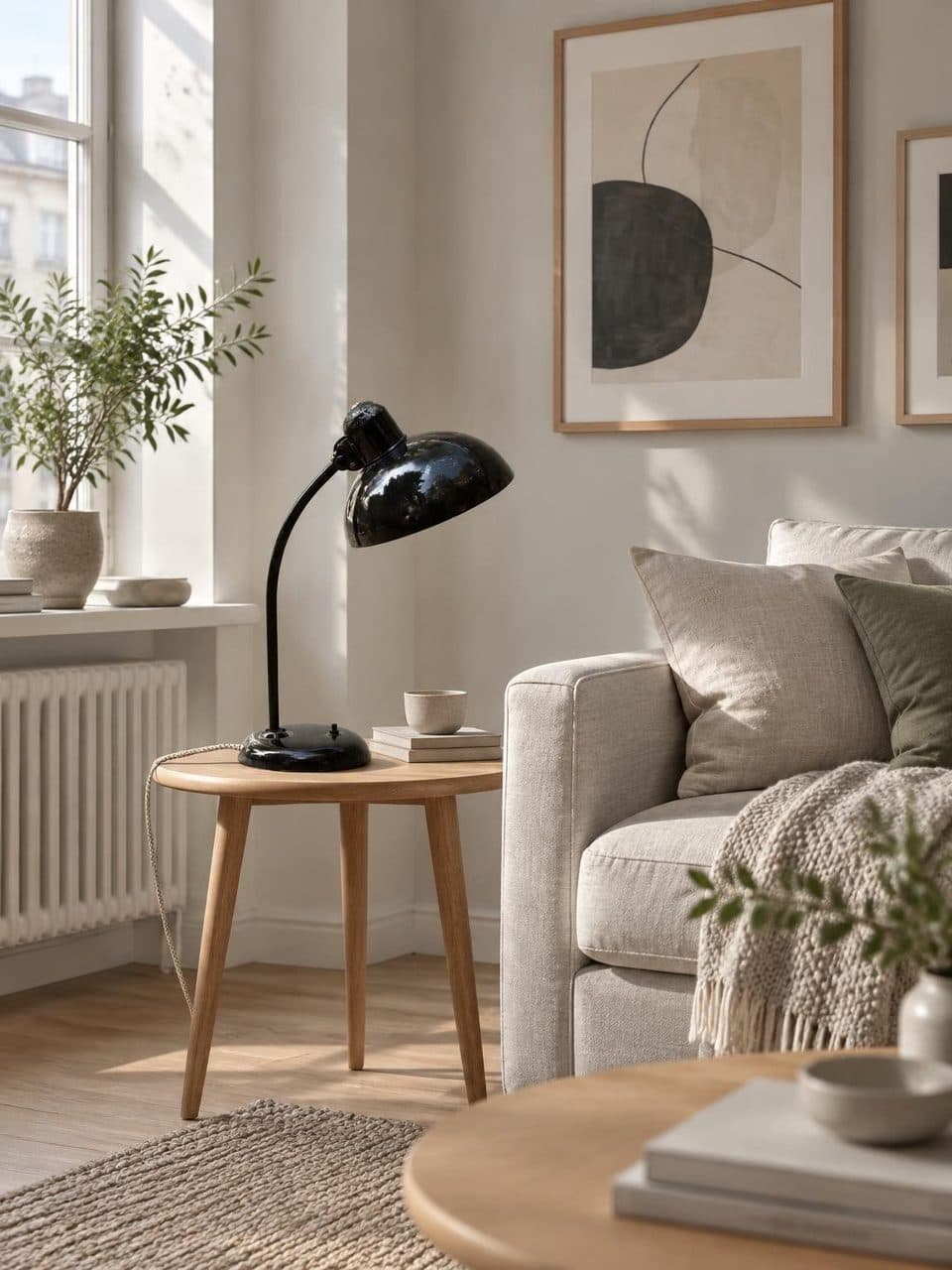
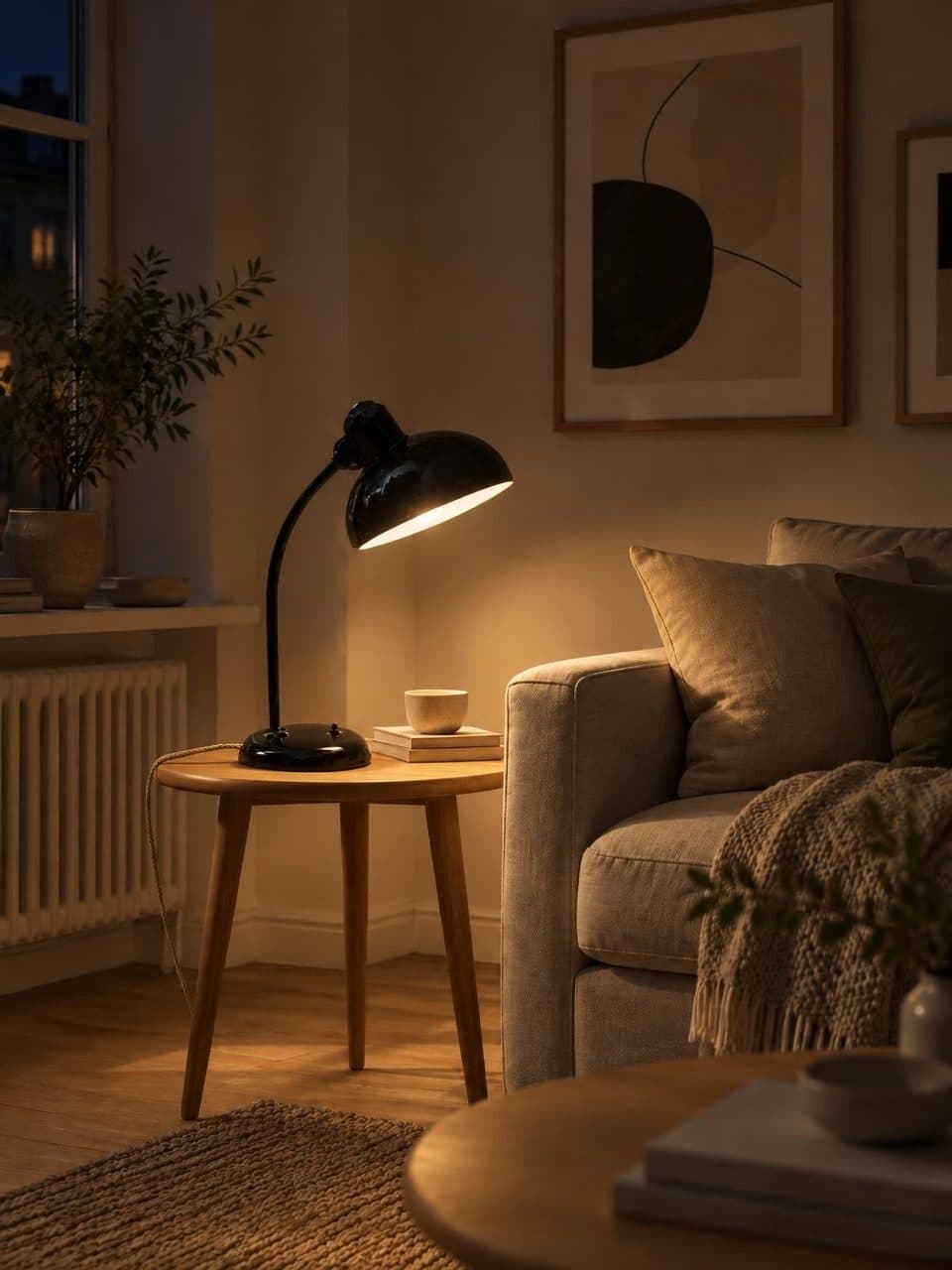
A desk lamp in white, black or a muted color adds contrast against pale wood. It works for reading and for marking out a corner.
Simple wall lamp
In a hallway, by the bed or next to a mirror, it frees up surfaces and adds another layer of light. Pick one with a slim arm or a small fabric shade.
How to light a Scandinavian room
- 1
Make the most of daylight
Sheer linen curtains and pale walls let daylight in and bounce it around the room.
- 2
Add soft general light
A pendant or ceiling light that diffuses well sets the base. Skip the bare bulb in the middle of the ceiling, which flattens the room.
- 3
Bring in mid-height light
Floor and table lamps where you read, eat or talk. They are what make the room feel cozy at night.
- 4
Finish with accents
A small lamp on a shelf or windowsill completes the scene. With three or four sources on at once, the light feels balanced.
Materials and palette of Nordic style
Scandinavian, or Nordic, interiors use white or warm gray walls, light oak floors, linen, wool and ceramics. Scandinavian lamps follow the same logic, with natural materials and simple forms.
Choose paper, pale wood, opal glass, painted metal and light textiles. Brass shows up in small details. Shiny chrome and heavily ornamented shades break the calm of the room.
Color temperature for Scandinavian lighting
At home, the reference is warm 2700 K light, close to an old incandescent bulb. In the kitchen or at a desk you can go up to 3000 K to see better without losing warmth.
Cool light of 4000 K or more turns bluish on white walls and strips away the mood that defines the style. A dimmer lets you bring the level down at night.
A Nordic room by day and by night
By day the window does the work. A lamp that is off is read by its shape, material and color, and it has to hold its own in plenty of daylight.
At night, pale walls take on the color of the lamp, the wood looks warmer and the room gathers around each point of light. That is why a paper or opal glass shade looks far better lit than off.
Common Nordic lighting mistakes
Most of them come down to cool light or putting all the light in one place.
- One cool ceiling light as the only source in the room.
- Bulbs with different color temperatures in the same room.
- Shades that show the bare bulb from the sofa.
- Too many objects competing with the lamp.
Show your lamps in a Scandinavian room with Lucy
Lucy is a virtual showroom for lighting stores. Every lamp in your catalog is staged in a Nordic living or dining room from your own photo, keeping the lamp's shape, color and materials.
Your customers see the lamp by day with the light off and at night with it on, and flip between the two with one switch. The scenes on this page show it with a pleated paper ceiling lamp over a dining table and a black metal table lamp next to a sofa.
Frequently asked questions
What lamps go with Scandinavian style?
Lamps with simple forms and natural materials. Pendants in paper, wood or opal glass, floor lamps with light fabric shades, enameled metal table lamps and slim wall lamps. What matters most is that the shade diffuses the light and hides the bulb.
What color temperature works in a Scandinavian living room?
Warm 2700 K light. It suits pale wood and textiles best and keeps white walls from looking bluish at night. In work areas such as the kitchen or a home office, 3000 K is a good choice.
How is Scandinavian style different from Japandi?
Both use wood, natural materials and warm light. Scandinavian rooms are brighter and use more textiles. Japandi adds Japanese calm, with fewer objects, lower furniture and slightly darker tones such as dark wood and stone.
How can a lighting store show its lamps in a Scandinavian setting?
With Lucy, our team loads your catalog and stages each lamp in one of five styles, Scandinavian included. Customers see it by day with the light off and at night with it on, and message you on WhatsApp from the product page. It costs US$20 a month, everything included.
Keep reading
- StylesJapandi stylePaper, wood and ceramic lamps, warm light and plenty of empty space. How to light a Japandi room.
- FeaturesDay and nightEvery lamp in a real room, switched off by day and lit at night, one tap apart.
- GuidesLamp color temperatureWhat 2700 K, 3000 K, 4000 K and 6500 K mean, which suits each room and how to explain it.
Your catalog, by day and lit at night
We migrate your catalog, stage every lamp, and you edit prices whenever you want.