What is a virtual showroom, explained for lighting stores
The term covers very different things, from a 360° tour of a store to a catalog of staged photos. This guide separates them and helps you choose.
Updated:
In short
A virtual showroom is an online space where customers see your products presented as they would be in a store, in context and in detail, from anywhere and at any hour. It can be a 360° store tour, a 3D space or a catalog with staged scenes. For lighting, what helps most is seeing each lamp lit.
Types of virtual showroom
360° tour
Panoramic photos of the store that customers move through on screen. It shows the space as it is, but each product looks small and the tour must be reshot when the display changes.
3D space or models
Products modeled in three dimensions that customers rotate or place in a virtual room. Each piece needs its own model, and glass, fabric and lit lamps are hard to render.
Catalog with staged scenes
Each product in a furnished room, with its own page, price and a way to get in touch. It is easy to browse on a phone and to keep up to date.
Video call or live selling
A salesperson walks the store on video. It feels personal, but it needs a scheduled time and isn't there for someone browsing after hours.
How to choose a virtual showroom for your store
- 1
Decide what customers need to see
In lighting, each lamp up close and lit. A format that shows the whole store but not each piece doesn't help anyone choose.
- 2
Count the upkeep
New products, discontinued ones and prices change often. Ask who loads each change and how much work it takes.
- 3
Test it on a phone
Many customers will open it on their phone, often from a WhatsApp link. It has to load fast and read well on a small screen.
- 4
Make sure it leads to a conversation
Every product needs a direct way to reach you. A showroom that generates no inquiries ends up as a pretty window.
What is a virtual showroom, in plain terms
A virtual showroom is built to show products and generate inquiries. An online store is built to take payment, with a cart, checkout and shipping. In lighting the difference matters, because a lamp usually comes with questions about size, installation and bulbs that are easier to settle in conversation.
It isn't a PDF catalog either. A PDF is a fixed list that goes stale with the first price change, while a showroom updates in one place and every product has its own address to share.
What a lighting showroom needs
A lamp is bought for how it looks and how it lights a room. That is why a lighting showroom needs a few things other categories can skip.
- Each lamp up close, with its materials visible
- The lamp lit, in a room at night
- Dimensions and a sense of scale
- Socket and bulb details
- A current price and a button to ask about it
Where each format falls short for lighting
In a 360° tour of a lighting store, dozens of lamps hang together, all lit at once. You see the store, not how one piece looks on its own in a living room. 3D models work well for furniture, but glass, translucent fabric and light passing through a shade are among the hardest things to simulate, and modeling every lamp in a large catalog takes a lot of work.
Lucy's approach, by day and by night
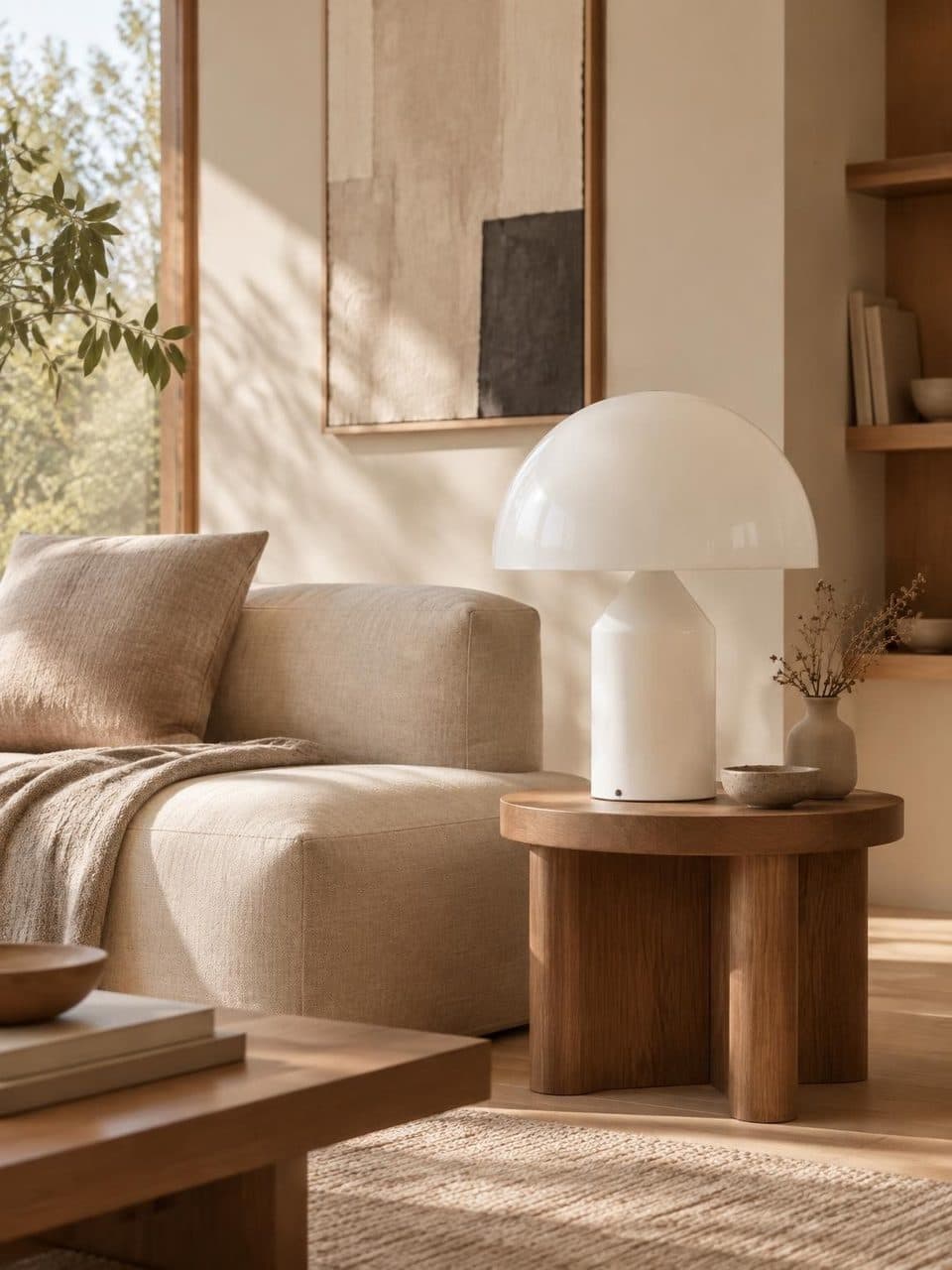
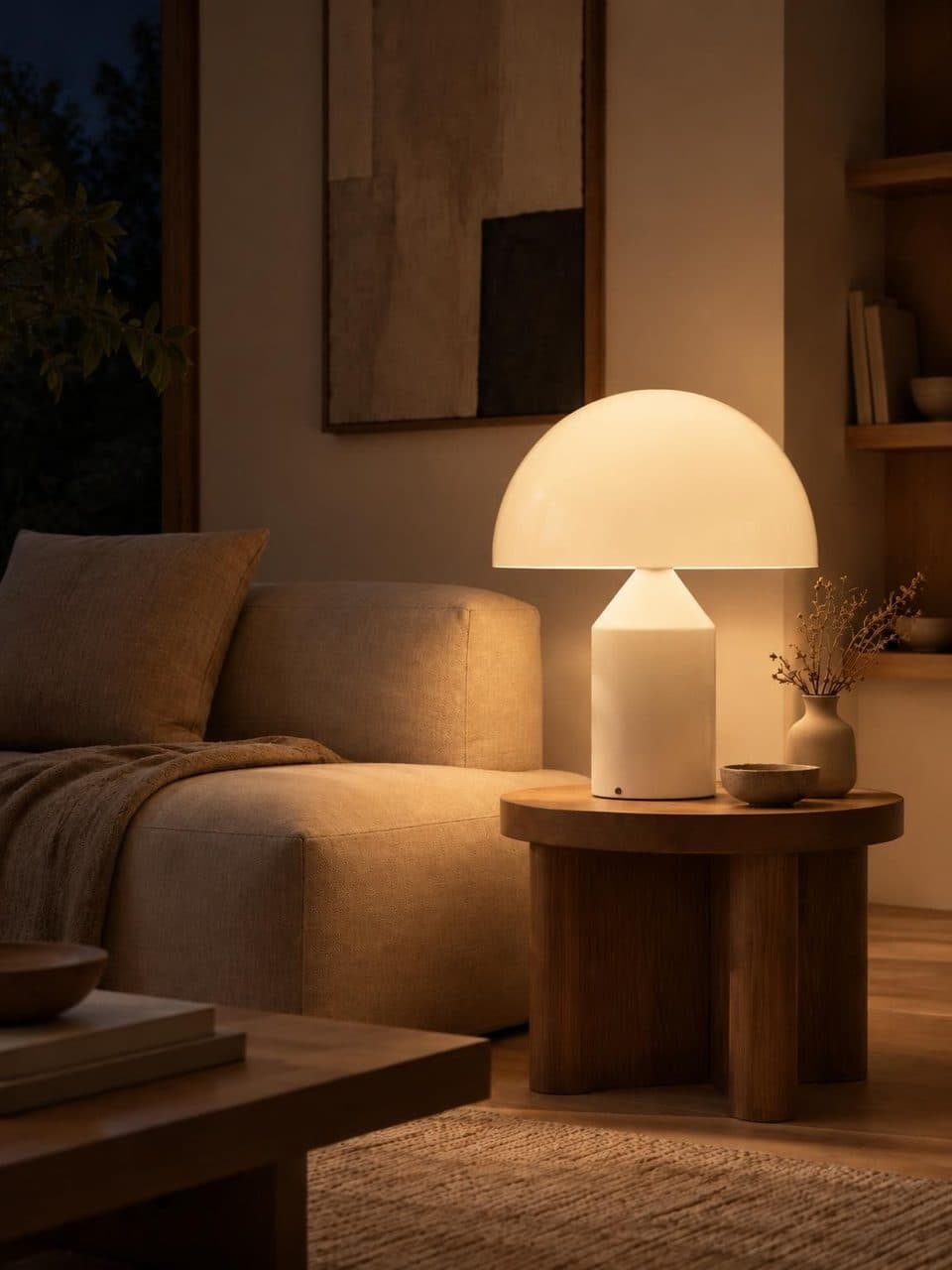
Lucy is a virtual showroom for lighting stores built on scenes. Every lamp in the catalog appears in a furnished room, by day with the lamp off and by night with it lit, and customers flip between the two with a switch.
Scenes are generated with AI from the store's own lamp photo, keeping the lamp's shape, color and materials, in one of five styles (Nordic, Japandi, Industrial, Mid-century and Parisian classic contemporary). The Lucy team migrates the existing catalog, and the store then edits names, descriptions and prices itself. It costs US$20 a month, everything included.
Frequently asked questions
Is a virtual showroom the same as an online store?
No. A virtual showroom is built to show products and generate inquiries, while an online store takes payment with a cart and checkout. In lighting, where purchases often come with questions about size and installation, a showroom with direct WhatsApp contact can be the better fit.
Do I need a physical store to have a virtual showroom?
No. It works for a store with a sales floor, a manufacturer selling to resellers or a business that sells only online. It replaces the visit for people who can't come in, and lets those who do come browse the catalog beforehand.
Do I have to photograph the whole store?
Only for a 360° tour. A catalog with staged scenes starts from product photos, one per lamp, so there is no need to rearrange the display or close the store for a photo shoot.
How much does a virtual showroom cost?
It depends on the format and on who produces it. Lucy costs US$20 a month on a single plan, with catalog migration, unlimited products and every feature included, and no per-image or per-product charges.
What photos does a showroom with staged scenes need?
One good product photo per lamp is enough, as long as it is sharp, shows the whole piece in even light and makes its shape, color and materials clear. The scene is built from that photo, so the clearer it is, the more faithful the lamp looks in the room.
Keep reading
- FeaturesDay and nightEvery lamp in a real room, switched off by day and lit at night, one tap apart.
- FeaturesCatalog migrationSend us photos, names and prices. The Lucy team loads your lamps and creates their scenes at no extra cost.
- Who it’s forLighting storesYour catalog with every lamp in a room by day and lit at night, ready to share.
Your catalog, by day and lit at night
We migrate your catalog, stage every lamp, and you edit prices whenever you want.